
Support Customers After the Sale

Now that you’ve signed the contract and brought a new customer to your business, you may feel a mixture of pride and relief. You’re thrilled that your marketing tactics and sales talking points were persuasive. The customer is in-house and you’re ready to exhale.

But not yet. In fact, the real work is just beginning. Whether you’ve sold a product or a service, the smooth execution of project work or the product performance and ease of use are only part of the story. To declare a sustainable victory, you must ensure that the customer is pleased with the decision to do business with your organization. You and your team must enable the feel-good with a series of actions collectively known as after sales service.

The customer experience operates on several levels, including what is traditionally called customer service. In our increasingly competitive business environment, business owners and leaders are now motivated to also manage what happens after the sale because it has impact. The facet of customer service known as after-sales service is the follow-up support that customers receive after they’ve bought your product or contracted to receive your services.

Business owners and leaders typically focus attention on filling the sales pipeline and strive to convert prospects into customers. That approach makes lots of sense, but it is to your advantage to devote a portion of your resources to what happens after the ink dries and payment is received. After-sales service is an important aspect of your customer retention strategy. It is a principal factor in cultivating repeat business, generating positive word-of-mouth that leads to referrals and enhancing the company brand.

Abandon customers once you have their money and it’s highly likely that they won’t return. It’s well-known that dissatisfied customers are bad for future sales, to say nothing of your brand’s reputation. But happy customers are your friends, the most valuable asset in your sales funnel.

The after-sales service your company provides might include advice on how to properly use the product or suggestions on how to get started with implementing the service. After-sales service often amounts to listening to customer feedback and being available to answer questions or give encouragement. In short, it’s a check-in to find out if the customer is satisfied with the purchase and helping to correct any glitches. After-sales service can make the difference between a happy customer who loves doing business with your organization, or one who is underwhelmed or even frustrated.

Customers who appreciate the way you and your team treat them are more likely to share their positive experience with your company and refer you to friends and associates. A 2016 survey conducted by The New York Times revealed that 65% of new business leads come from referrals. A 2011 study of 10,000 customers of a German bank found that customers who were referred to the bank by someone they know had a 16% higher lifetime revenue value than those who were not referred.

So how can you and your team build a winning after-sale service experience for your customers?Depending on your business, you can start the good vibes by sending business-appropriate thank you notes (paper or electronic) to express how much you appreciate that the customer chose to work with your organization.

Create a responsive new customer onboarding system, in which you welcome the customer, as discussed above, confirm customer priorities or must-haves, and also verify time table deadlines (if applicable) and project milestones. Do whatever is possible to make working with your organization easy. Encourage client feedback and listen to identify the onboarding experiences and information that your customers value. Standardize the process and use it consistently to set the stage for a positive working relationship.

Whether or not you send a note, your customer may be very happy to receive a follow-up call or email to get feedback on how, or if, the product or service is delivering and if expectations are being met. When performing project work, communicating progress, with a quick email or phone call on a weekly or bi-weekly basis, demonstrates your professionalism and commitment to excellence.

If the experience is a little bumpy, be ready to make suggestions, offer coaching or training, or even make an exchange. What surfaces in these conversations can be used to evaluate and, if necessary, to build or tweak more responsive after-sale service protocols.

Thanks for reading,

Kim

Image: In Barcelona, Spain a flamenco instructor coaches students
Whenever You Call

If half of what we do to find success is about showing up, the other half is surely about follow-up. Money is regularly left on the table because the person who was awarded the golden key couldn’t make him/herself go to the post office to pick it up.

A handful of hustle and a drop of two of discipline are required for this recipe. When your marketing tactics actually work—-you meet a potential prospect while networking and s/he hands you a card and asks to continue the conversation—-you must respond. Or maybe you want to drum up some business and feel that making a few cold calls will be worth the effort. The operative word is call.

Despite the technological advances that have been made over the years the telephone, patented in the U.S. by Alexander Graham Bell in 1876, has demonstrated staying power. Videoconferencing makes electronic communication more personal but it must be scheduled. Also, WiFi access is needed. The telephone’s audio-only format nevertheless enables good communication and it’s easier to use than Zoom. Plus, it never crashes.

According to a 2021 survey by Indeed, the best time to call a prospect, especially when you’re cold calling, that is, attempting to make your first contact, is between 4:00 – 5:00 PM. At the. end of the day, the prospect is often more inclined to not just take the call and more likely to your pitch. At the end of the day, the prospect is more likely to be at his/her desk, is unlikely to start a new task and is perhaps wrapping something up and is perhaps also more inclined to listen to your offer.

If you’d like to try a morning call, late morning is preferable. Calling during the approach to lunch time, 11:00 – 11:45 AM, is the best time for morning calls to prospects, whether cold calls or warm (meaning the prospect has requested a call).

The best days to call prospects are, you guessed it, Wednesday and Thursday. Monday and Friday are likely to yield less than stellar results for obvious reasons. Tuesday isn’t so bad, but apparently there can be spillover from the Monday rush that takes away some of its appeal.

Script your pitch

It will be very helpful to create a cold call and a warm call script. You want your delivery to be smooth, your language concise, your tone upbeat and, of course, your pitch airtight. You do not want to forget to say something important and you don’t want to be at a loss for words. Neither do you want to sound like a robot who’s memorized the words. Write a script to ensure that you’ll sound confident, conversions, knowledgeable and in control.

Helpful hints

  • Should the prospect take your call, ask if you’ve called at a good time and next, ask if s/he has five minutes to talk.
  • Present your call-to-action not as an urgent push to make an immediate decision but rather to persuade the prospect to commit to follow-up action, as a way to continue the conversation. S/he will likely want to discuss your offer with the team.
  • If a prospect contacts your company by phone or email for any reason, respond within an hour.
  • If you meet a prospect while networking and s/he has questions about your products or services, call or email the next day.

Thanks for reading,

Kim

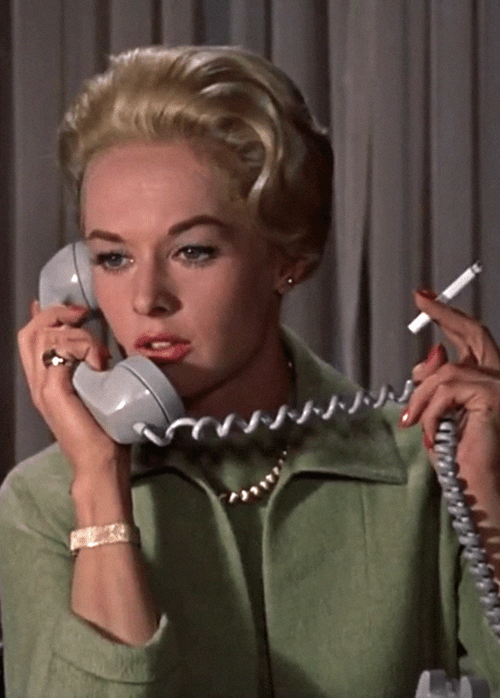
Image: Tippi Hedren, the original Cool Blonde, in The Birds (1963), directed by Alfred Hitchcock

Ride the Speaker Circuit

In-person happenings are once again a thing and audiences are turning out in response. Now is the time for Freelancers to research business and professional association websites to figure out where and how to get on a couple of calendars, whether 4th quarter or first half 2022. You know that speaking is a time-tested way to demonstrate your expertise, enhance your brand and meet the right people, colleagues or potential clients, along the way.

There are several ways to get in front of an audience. Whatever public speaking opportunities are open to you and fit your agenda and style, you”l be wise to polish your presentation skills before taking the mic. Even top-tier speakers regularly work with coach. Listed below are public speaking formats you might pursue as well as suggestions, aimed at featured speakers, to help you level up your in-person event speaking technique.

  • Moderator or speaker on a panel
  • Podcast or webinar guest
  • Introducing the speaker
  • Featured speaker

Frame your story

We all have stories to share and some are quite entertaining or even inspiring. To turn your story into a memorable communication vehicle, you must learn how to find and present a story arc that appeals to your audience. The best speakers are persuasive storytellers who learn how to shape a beginning. middle and end of their topic that fits both the audience mind-set and also their purpose —-agenda, if you will—-for the talk. Learn what interests or matters to your audience to help yourself gauge what they likely already know about your topic and what new information or perspective they’ll probably appreciate.

Balancing act

Limit the scope of your talk. Avoid trying to address every element. The kiss of death for a speech is giving Too Much Information, in particular if it’s irrelevant to the audience. When you know, or inquire about, who’ll be in the room for your talk, you’ll have a good idea of how to not only frame the narrative but also, how technical (or basic) the information you present should be.

In most cases, a speaker can feel confident to concisely introduce his/her topic, give two or three reasons why s/he finds the subject important and provide three or four reasons why listeners should also care about the topic. In so doing the speaker can describe the problem, describe the search for a solution and celebrate the discovery of the winning formula as a victory by listing benefits that resonate with the audience. People like a hero’s journey story, that is, a tale of solving a vexing problem, the struggle to rectify it and applauding the good things that happen as a result.

Media support

Power Point slides are the go-to presentation visual, but you may want to include a video or audio clip as well. You might choose to forego slides altogether and use one or two video or audio clips. The sweet spot for a clip is 60 – 120 seconds, which is the length that audiences prefer, according to the experts.

If you use slides, presentation experts advise that you refrain from listing on the slides the bullet points of what you’ll discuss; put those on note cards instead. Also, it’s recommended that you avoid the temptation of reading from slides. The experts recommend that slides should ideally be used for images—- charts and graphs, photos, or other illustrations.

Stand and deliver

Most of all, one must rehearse and rehearse some more. Use bullet point notes to map out what you’ll say. Rehearse until you can deliver the talk with confidence, but attempting to memorize your talk word for word may not be possible. You can also work on the physical and vocal aspects of presenting your talk.

In a famous 2011 TED Talk, Harvard University professor Amy Cuddy modeled what may actually be the ideal stance for public speakers. Cuddy recommended that speakers stand up straight, relax their shoulders and knees and keep their feet shoulder distance apart.

Finally, develop your vocal technique. Keep your tone of voice conversational, rather than attempting to sound authoritative or forceful. Make eye contact with a few members of the audience to help both them and you feel connected.

In 1992, a speech coach working with Bill Clinton when he campaigned for the presidency devised methods that solved the riddle of what to do with ones’ hands while speaking. The advice was to pretend that you’re holding a basketball in front of your ribs, palms facing in, to project truthfulness and trustworthiness. Through the talk, the speaker can also bring the fingertips into a pyramid in front of the ribs to project calm and self-assurance.

Thanks for reading,

Kim

Image: Gloria Steinem, women’s rights advocate, speaks in New York City in 2017.

Will the “Great Resignation” be Great for Freelancers?

Americans are quitting their jobs. In behavior apparently ignited during the significant chunk of time spent away from offices as a result of the coronavirus shutdown, a surprising number of American workers have decided that they’re not going back to business as usual.

A LinkedIn survey revealed that 46 % of respondents felt that the time spent at home — either on lay-off or working remotely — during the pandemic shutdown led them to rethink their current work situation. The U.S. Department of Labor reported that during April, May and June 2021, 11.5 million workers gave notice. The February 2021 Microsoft Workplace Confidence Index survey of more than 30,000 workers showed that 41 % of American workers are considering quitting; that number increases to 54 % when looking solely at Gen-Z employees. If that’s not enough, a new Gallup survey found that 48 % of workers are actively job-hunting.

Upwork, the online marketplace for Freelance assignments, released a report in August 2021, “The Great Resignation: From Full-time to Freelance,” yet another examination of why American professionals are leaving, or seriously thinking of leaving, their current full-time employment. As many businesses anticipate a return of their employees to the office, sometimes on a limited basis, the survey of 4,000 workers showed that some professional-level employees are not willing to surrender their WFH work-life balance. Approximately 9 million pandemic WFH employees, 17% of professionals, apparently would consider looking for another job if forced to return to the office on a full-time, or even part-time, basis.

Needless to say the “Great Resignation,” as the phenomenon was named by Anthony Klotz, Associate Professor of Management at Texas A & M University, has the potential to create significant disruption for many organizations if it should come to pass in the way that several studies indicate. Already, workforce development experts are advising in particular mid-size organizations, who cannot compete for talent in the way that big businesses are able to do, to find an opportunity in the instability and tap the power of the growing on-demand workforce—Freelance consultants, that is.

Rather than scrambling to hire employees on short notice, company leaders would be better served by supplementing their teams with talented Freelancers—you and me, my friend—who own the skills needed to successfully tackle any project, from designing eye-catching websites, to managing a multi-platform social media campaign, to conducting comprehensive research projects. Instead of paying both high salaries and benefits for full-time employees, mid-size organizations can access top-drawer Freelance talent on a per project basis and keep overhead down as they achieve objectives.

No doubt many company leaders will first attempt to squeeze more work out of current employees, but that all-too-common default behavior probably won’t fly anymore. In fact, that habit could partly explain why valuable team members quit. The bosses will be nervous and may not know where to turn. Still, deciding to outsource and bring in Freelance talent may quickly be seen as inevitable.

So how might Freelancers cash in on the “Great Resignation?” Carpe diem—-you know how to do that! Start by putting yourself in the shoes of an employer who has a mission-critical project, a deadline and a team that’s down two key players. Below are sources that would be familiar to employers looking for Freelance talent so that an important job will get done. You’ll also find a credibility building resource that when you commit to using it will showcase you as a very attractive candidate to hire.

  • LinkedIn Populate as many categories of your profile as possible and be certain to include examples of your best work. If you haven’t participated in ProFinder, the service where employers solicit Freelancers for projects, create a profile and be prepared to quickly respond to employer requests. Only five Freelancers may bid on a project.
  • Upwork and Fiverr These gig worker marketplaces seem to be more welcoming to web designers and IT programmers, but I was hired for a writing project on Upwork three years ago. To get hired, you must search for and pursue assignments and at Upwork, you’ll wind up paying a small fee to bid on a job.
  • Help a Reporter Out. Prospective employers will surely type your company name into a search engine to see what comes up. In addition to great content that you’ve written and your social media sites, include as well your insightful quotes that have appeared in relevant publications. Quotes are an excellent way to demonstrate your know-how and convince prospects that you’re a good hire. https://www.helpareporter.com/sources/

Thanks for reading,

Kim

Image: An office in Palo Alto, CA circa 2000