We all know that bringing to market a desirable product or service is the foundation of every successful business. It would seem that alone would guarantee the ongoing presence of loyal paying customers but we also know that other factors can influence business viability. Business location and pricing may immediately come to mind, but there are less obvious factors involved as well and those factors can potentially play a significant role in creating a successful enterprise. Their absence or mishandling can tank it.
One factor that can convert an occasional customer into a repeat customer is the right brand identity that is articulated by a brand story that resonates. When a business develops an appealing brand identity and delivers a brand story that seeds an emotional connection with target customers, brand loyalty will be the likely result. Feelings of empathy and belonging drive the process.
According to Gerald Zaltman, emeritus professor of business administration at the Harvard Business School, 95% of customer buying decisions emanate from the subconscious and are fueled by emotions, not logic. In 1997, he received a U.S. patent for the Zaltman Metaphor Elicitation Technique, which is used to explore the unconscious thinking that drives behavior. Based on Zaltman’s research-backed theories about what motivates customers to buy, or not, we might infer that an effective and accessible way to create an emotional connection that draws current and prospective customers to a company and its products and services is a good brand story.
Now like every other marketing strategy, a powerful and effective brand story requires research and planning. You have to figure out what to say and how to say it. Mostly, a compelling brand story will focus on the customer, s/he who makes the purchase. We’re talking B2B products and services here, something meant to benefit an organization, even if used by just one department. Still, it’s important to remember that the buyer is an individual (representing the company) and s/he is often (but not always) one of the users of your product or service.
Think P2P, person-to-person, and incorporate personal, individual benefits and user experiences as part of your storytelling—-brand narrative, buyer’s journey, or selling points—-that make the story relevant and memorable to potential buyers. Logic-based reasoning and key statistics are helpful but they’re not the story. Bullet points and numbers quickly fade from memory.
Remember as well that buyers today have a finely-tuned sense for authentic and inauthentic storytelling and authentic means that the brand story will validate what the listener already believes and also reflects your own values. Wrap your products and services in the context of a story and your narrative instantly becomes far more memorable and trustworthy than a digital banner listing your current sale prices and website address.
The emotional connection that leads prospective customers to identify with the hero of the story and root for his/her victory is a big part of why case studies and testimonials are such effective tools. Presenting a story that shows the personal benefits someone enjoyed through your brand helps potential customers to visualize how your products and services could help them, too. Real-life stories that are presented in a compelling manner will make your brand far more memorable and valuable in the minds of your customers.
Thanks for reading,
Kim
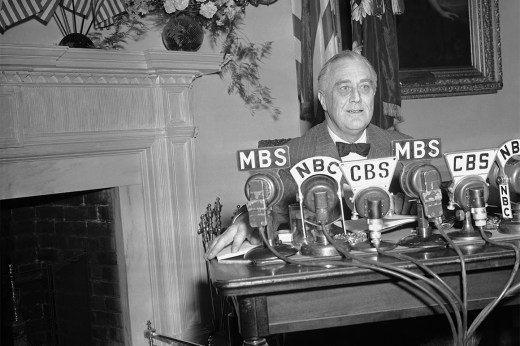
Image: Franklin Delano Roosevelt (January 1882 – April 1945) was elected President of the United Stares four times—1932, 1936, 1940 and 1944. His pioneering “ Fireside Chats,” broadcast on coast-to-coast radio, set a new standard in how political leaders communicate with the citizens.
 Freelancetheconsultantsdiary's Blog