Hello there. It’s been quite a while since we’ve explored the topic of branding. Establishing and maintaining a reputable brand for your company has the power to generate significant financial rewards even for single owner Freelance entities. Let’s dive in.
What it is
A brand is the characteristics and attributes associated with a company. The company brand consists of the qualities for which the company and its products and services are best known, by its customers and by the public. The company brand defines and communicates the experience it provides for its customers. Especially for larger companies, the company brand is powerfully and memorably communicated by its logo symbol. Brand = Reputation.
Branding
The process of creating and communicating the benefits, characteristics and trustworthy reputation that company owners and leaders envision for the products and services that the company sells. The objective of branding is to persuade customers and prospects to associate those benefits, characteristics and positive reputation with the company, as demonstrated by its products and services, because it will resonate with, inspire trust in and appeal to current and potential customers. Branding gives a business an identity and distinguishes the company from its competitors.
Create and discover your brand
Brand development is a two- way street. Company leaders must understand what the most likely (that is, target) customers for the products and services will be. The brand within is what company leaders determine the brand should be, as represented by the market position, pricing, sales distribution and product placement sections, advertising and social media strategies, packaging and so on. But customers also have a say in a company brand. The brand without consists of how current and prospective customers perceive and respond to the company brand.
Building a brand starts with knowing the customer and the customer’s expectations for your company’s products and services, which are shaped and influenced by what competitors, those who’ve come before you, have done.
Nourish and promote the brand identity and voice
Believe it or not, a brand has a life of its own and a personality to go with it. Company owners and leaders must build a brand whose voice and identity convey trust, reliability and good value for the money spent to acquire the company’s products or services.
The brand identity may be cutting edge, solidly dependable, luxurious, user-friendly, inexpensive and practical, or any number of other qualities. The brand voice will convey brand identity attributes through the style of the website, the company logo, colors used for the website, email marketing templates, company business cards, product packaging and other marketing materials, social media platforms used and marketing messages. Increasingly, company values and guiding principles, from environmentalism to current interpretations of social justice, influence the the brand voice.
What impression do you want customers and prospects to come away with when encountering and interacting with your company? Who are the primary customers? What do they aspire to communicate about themselves when they use your products or services? Those are the guide posts used to create and sustain the brand identity and voice.
Manage the brand
Company leaders must vigorously and continually monitor the tangible and intangible elements of the brand and ensure their relevance to customers and prospective customers.
Advertising and sponsorship choices, marketing and PR campaigns, content marketing topics, social media posts, the company website, product packaging, or the verbal “packaging” of a service, i.e., its defining message and, ultimately, the customer experience, from the Top of the Funnel buying cycle through to actual usage of the product or service, must communicate all that is valuable and memorable about the brand.
Getting started
As always, everything begins with knowing your customer. What motivates them to seek out products or services like yours? How do they use those products or services? Where do they expect to buy your products or services and how much do they expect to pay to for them?
Define the qualities and benefits that customers and prospects value your products and services for. To make the most of that information, the Marketing 4 P’s could be helpful—-Product, Price, Place and Promotion. I like to add four more P’s: Position (luxury or low-cost?), Process (the customer experience, from visiting the website to making the purchase to speaking with customer support); People (all interactions with customer-facing staff, including the company owner, manifests the brand); and Packaging (especially for a tangible product, the style and quality of its packaging, its customer eye-appeal, conveys the brand).
Thanks for reading,
Kim
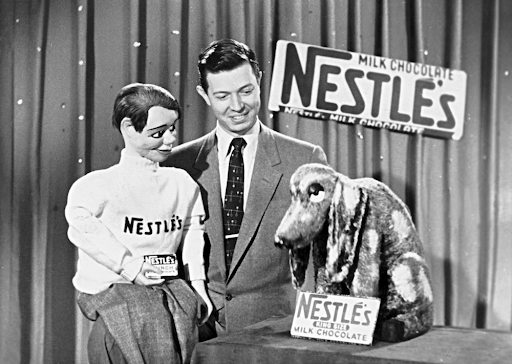
Image: Brand identity 1950s style as presented by still powerful Nestle. The character “Danny O’Day (L), ventriloquist Jimmy Nelson and the much loved Farfel
 Freelancetheconsultantsdiary's Blog