Press Release: To Send or Not to Send?

I’m impressed! You have news that you’d like to share with the world, with a particular emphasis on those who are potential clients and referral sources for your business venture, and you are sophisticated enough to think outside the box in an old-school way and consider sending—-ah ha!!—a press release. Yes, a press release remains a relevant tool, the standard route to media outreach.

While most everyone else chooses to make big announcements by way of social media you, sophisticated Freelancer friend, understand the reach and power of traditional media outlets, be it radio, neighborhood newspapers, or digital-format regional business magazines. Social media is great outreach but there are times when you want to get beyond your followers and obtain third-party support that implies objectivity and real world legitimacy.

Be aware that a press release is a marketing and sales tool. The idea is to communicate a message to customers and prospects through the vehicle of a print or online article, adding the authority and credibility of the publication to the message.

Before you go online and remind yourself how to write a press release—Who, What, When, Where, Why and How—first ask yourself these two questions and follow a couple of pointers. These may sound stringent but they’ll help you make a rational decision regarding media outreach for your organization.

  1. Am I newsworthy? Do you or your company that regularly receive media attention? If so, then you are newsworthy. Press releases by larger, established, household-name companies receive more attention than smaller companies and startups. Have you or your enterprise received any media attention at all? If so, that puts you at an advantage. Or, have you served on the board of your local chamber of commerce, library, or neighborhood business association? Are you a long-term and active member of a neighborhood group, school, Rotary Club, or place of worship? In other words, are you well-known in your community and can you leverage your renown to persuade an editor or reporter that you have sufficient name recognition among the media outlet’s readers or listeners that would motivate them to learn more about you?
  2. Is my story/announcement news? To get your message communicated through the publication, you’ll need to convince a reporter or editor that your message (or the story surrounding it) is newsworthy. Your story must have the potential to appeal to the readership of the publication, or listening audience if podcast or radio. So if your goal is to fill seats at a conference, don’t send a press release. The most important element of a press release is that it’s helpful to reporters, by offering them news of interest to their audience. Journalists don’t care to help fill seats at your conference.                                                                                                3. Write like a reporter   If your press release looks and feels like a real article, reporters will often just file it as a story with minimal editing. Therefore, it’s up to you to make sure that your press release looks and feels like a real news item. Avoid using business jargon.                                                     4. Call media outlets to confirm interest in your story Before sending a press release, call all media outlets on your wish list and ask to speak to the (business) appropriate editor or reporter. Do yourself a favor and read 3 – 4 issues to familiarize yourself with the types of stories that are carried and the names of reporters who cover your topic. Then, contact the reporters that you really want to cover the story. Mention that you’ve read their stories and name at least two. If you reach an editor, still make it known that you are familiar with other stories in your category.

Thanks for reading,

Kim

Photograph: (circa 1988) Phil Donahue (L) and candidate for president George H.W. Bush on The Phil Donahue Show.
How B2Bs Use Social Media

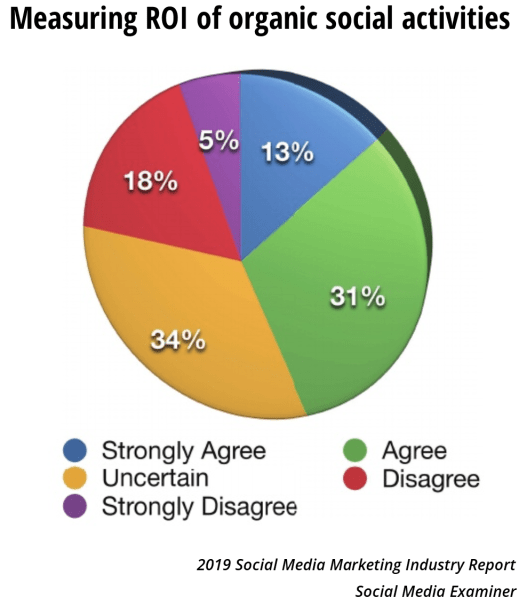
Take a look at the pie chart above. In response to the question, “I am able to measure the return on investment (ROI) for my organic social media activities,” only 44% of marketers in a recent survey that examined the use of social media in the B2B and B2C sectors agreed they were able to measure the performance of their organic social activities. This challenge has plagued marketers since the format appeared. Social media marketing is now included in most marketing strategies, yet a demonstrable ROI still eludes many. In my experience as a Freelance marketing professional, business owners and leaders still haven’t figured out how to effectively use the medium, measure its success or, for that matter, establish reasonable expectations for its benefits.

The wrong platforms are used. Content doesn’t fit platform. Investments are made in platforms that customers do not follow. Postings, after an initial burst of energy, appear only erratically after four or five months. Most of all, in an effort to both save money and simplify, social media all-too-often becomes  the company’s marketing strategy, rather than one component of the strategy.

The 2019 Social Media Marketing Industry Report, released by Social Media Examiner, surveyed more than 4,800 marketers with the goal of understanding how they use social media to grow and promote their organizations. for the past five years, the top benefits derived from social media are increased exposure in the marketplace and increased website traffic. Company exposure grew to 93% (from 87% in 2018) and website traffic improved to 87% ( up from 78% in 2018). Lead generation increased to 74% from 64% in 2018 and, most importantly, sales rose to 72% from 2018’s 53%, solidly demonstrating that B2B and B2C marketers see positive results derived from investment in social media. https://www.socialmediaexaminer.com/social-media-marketing-industry-report-2019/

Facebook remains the number one social media platform for both B2C and B2B marketers, who together account for 94% of business use on the platform. When B2C and B2B are examined separately, however, LinkedIn takes the number two spot for B2B, at 80%, while the number two B2C pick is Instagram, at 78%. Facebook and Instagram were the top two favorites of marketers overall in 2018.  

YouTube is still the number one video channel for marketers (57%) and Facebook’s native videos hold second place (50%). When the survey separated B2C and B2B responses, B2B marketers were found to choose LinkedIn native videos, while B2C marketers preferred Instagram stories and Facebook native videos. 

Of the platforms marketers regularly use for social media ads, Facebook is far and away the number one choice but once again, when separating B2B and B2C, the results show that B2B marketers use more LinkedIn ads while B2C marketers favor Facebook and Instagram ads.

Now, let’s look more deeply into 2020. A serious contender, at least in the B2C space, will be TikTok, an already massive platform beloved by Generation Z and Millennials. Launched in 2016, the site has more 500 million + active users worldwide; over one million of its 15 second videos are viewed every day. In January 2020, Statista reported that 37.2 % of TikTok users are age 10 -19, 26.3 % are age 20-29 and 16.7 % are age 30-39.

TikTok now has a shopping feature called “Hashtag Challenge Plus” that allows users to browse products that are associated with a sponsored Hashtag Challenge, all without leaving TikTok’s platform. Customers have now spent $50 million on TikTok purchases and 42% of all TikTok revenue now comes from the USA.

Did someone say influencer marketing? In 2020 and beyond, it’s safe to say that global brands whose customers skew to tweens and young adults will seize upon TikTok to spread their brand voice, engage with audiences and attract younger consumers, the golden key to future sales.

Thanks for reading,

Kim

A 360 Degree View of Your Brand

I recently gave a talk on branding, a term that we know gets used quite a bit, but I wonder if Freelance consultants and business owners fully understand what a brand means and how the brand can be put to work in service of the business? It is vitally important to first, recognize certain identifying characteristics of the business, which need not be complex or unique, and then spin those characteristics into a mythology or a story, a brand narrative or creation story, that is then packaged and marketed as a brand, destined to become a powerful selling tool.

Depending on your business, you might even build a brand around your location. Maybe you own a restaurant, or a hardware store, in Idaho. Common impressions that Idaho natives and Americans in general have about Idaho—rugged, outdoorsy, resilient, folksy, friendly, mountainous, beautiful—can be used to build a distinctive and compelling brand narrative. The essence of Idaho can become a defining characteristic of the brand.

Other branding possibilities are grandmas recipes (restaurants), the size of the establishment (large and comprehensive or small and curated), the longevity of the business, the number of generations that the same family has owned and operated the business, prestige clientele, expertise in a niche market, or superb customer service.

The function of a brand is to communicate. The brand is the reputation of the business. What a business leader must decide is the primary message that should be communicated and how to articulate that message.

What can the brand tell current and prospective customers? The brand tells them what to expect when doing business with you and your company—the available products and services, that the business can be trusted to deliver what they expect it to deliver, for starters. Branding is about reassuring. Branding is about consistency, predictability, trust, dependability, familiarity, the customer experience and comfort.

If the business owner or leader does it right, the brand will become habit-forming and the list of repeat customers will grow. Customers will be motivated to refer their friends, family and colleagues to the business. They will endorse the business on rating sites like Angie’s List, Yelp and Trip Advisor.

When examining and/or refreshing the brand, remember that the brand is two-sided. There is the internal brand and the (better-known) external brand. The internal brand represents what the business owner and leaders feel describes the brand. The external brand is how the business is perceived by the public, i.e., customers. The internal brand is self-image and the external brand is reputation.

It’s easier to start the brand examination internally—what do you, business owner or leader, want your organization to be known for? What do you interpret as its competitive advantages? What do you see as the value proposition or distinguishing characteristics?

The external view can be assessed by talking to customers, whether the best customers or occasional users of the products or services. In both cases, it’s important to ascertain what has persuaded them to do business with you. What brought them to your establishment, how do they feel about the experience and was the problem solved or objective achieved? Who is motivated to do business with you again and why? Who will not do business again with you and why?

In this way, business owners and leaders can determine what customers and prospects consider to be the defining competitive advantages and selling points. Conversations, face-2-face or by social media, and customer surveys are among the useful ways to learn what makes a difference and keeps customers coming back—or drives them away. If something can be summed up in a clever tagline, so much the better. Most of all, the business must promote what customers value most and express that message in language and symbols that will resonate.

When the value proposition, i.e., the value that the products or services will deliver to customers, perceived competitive advantages and selling points have been recognized and articulated, the business owner and leaders can confidently spread the word by way of promotional channels that customers and prospects trust and put the brand to work for the business.

Thanks for reading,

Kim

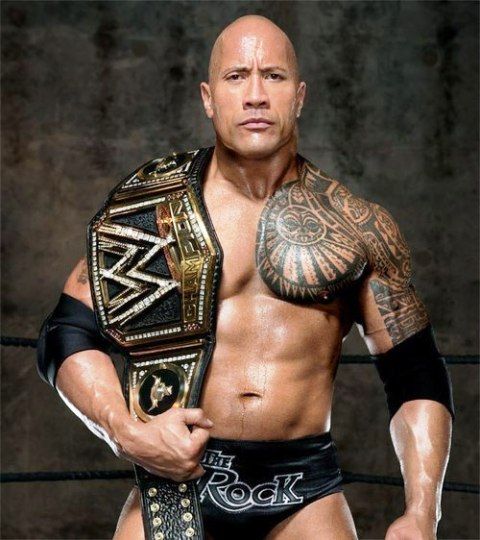
Photograph: Dwayne Johnson, aka “The Rock,” whose approach to branding has both a physical and professional dimension.

The Hidden Codes of Body Language

On Monday February 10 at 6:00 PM I’ll give a 1-hour presentation on the basics of branding your business — or yourself! Find me at Staples/Government Center in Boston. Learn how to sharpen your image and tell your story in 2020. Please click the link and RSVP to attend. Free. (and I will work on my body language!) https://www.eventbrite.com/e/your-brandknow-it-own-it-work-it-tickets-92254605007

Kasia Wezowski, co-Founder (with husband Patryk Wezowski) of the Center for Body Language, a firm based in Antwerp, Belgium that teaches body language training and decoding to business executives and co-author (with her husband) of The Micro Expressions Book for Business (2012) says that non-verbal communication is powerful behavior that can accurately predict one’s success or failure. Wezowski claims her research has proven that decoding someone’s body language can predict the outcome of everything from presidential elections or one’s inborn potential to have an advantage when in negotiations.

The Wezowskis have studied successful leaders across a range of fields and they’ve identified several positions which their data indicates are effective and persuasive body language that will help you bring listeners around to your way of thinking. In 2013, they delivered a popular TEDx Talk How Microexpressions Predict Success.

The box—trustworthy and truthful

Early in the political career of former President Bill Clinton, he would often punctuate his speeches with big, wide arm gestures that had the boomerang effect of leading audiences to perceive him as untrustworthy. To help Clinton keep his body language under control, his public speaking coach taught him to imagine a box in front of his chest and mid-section that would contain his hand movements within it. Since then, “the Clinton box” has become a popular term in the public speaking field.

Hold the ball—commanding, dominant and in-charge

Gesturing as if one held a basketball between the hands helps the body signal confidence and control. Do this and the audience will feel that you, learned presenter, literally have the facts at your fingertips. The Apple Computers co-Founder Steve Jobs frequently used this hand position while delivering one of his legendary speeches.

Pyramid hands—calm and self-assured

When people are nervous, their hands often flit about and fidget. When one feels confident and in control, one is usually also calm and still. Help yourself to communicate this state of being by clasping both hands together in a relaxed pyramid. Many business executives employ this gesture, so beware of overuse or pairing this technique with facial expressions that may telegraph anger or contempt. The idea is to show that one is relaxed, not smug.

Wide stance—confident and in control

How people stand is a strong indicator of their mindset. When facing an audience, one does not want to slouch! Instead, stand in this strong and steady position. The feet are about shoulder width apart; knees are relaxed and not locked. The spine will be erect and the neck and shoulders will also be relaxed. Now the speaker signals that s/he has important information to share and that s/he feels confident. In a 2012 TEDGlobal talk Your Body Language Shapes Who Your Are, social psychologist Amy Cuddy sparked a sensation when she modeled this and other so-called “power poses.”

Palms up—honest and accepting

This gesture indicates openness and honesty.  Media impresario Oprah Winfrey makes frequent use of this tactic during her speeches. She is a powerful, influential figure who also appears willing to connect sincerely with audiences, be it one person or a crowd of thousands.

Palms down—strong and assertive, yet calming

The opposite movement can be viewed positively too—as a sign of strength, authority and assertiveness. Former President Barack Obama has often used this technique to calm a crowd right after moments of rousing applause in response to his speech.

Thanks for reading,

Kim

Photograph: © Christopher Simon Sykes/Hulton Archive. Ronnie Wood (L) and Mick Jagger of The Rolling Stones strike Gods of Rock n’ Roll power poses at Madison Square Garden in New York City (1975 on the Tour of the Americas)