Got Power? 6 Types You Should Recognize

“Nearly all men can stand adversity but if you want to test a man’s character, give him power.” Robert G. Ingersoll (1833 – 1899, NY), orator and author of Some Mistakes of Moses (1879) and known as The Great Agnostic

“Power tends to get to people’s heads. We’re not really trained to handle power well.” Nicole Lipkin, Ph.D., psychologist and author of What Keeps Leaders Up At Night (2013)

Power is sexy, seductive and sometimes addictive. Power is heady, power is magnetic, power brings perks—money and sex, fast cars and prime real estate, fame, prestige and respect. Perhaps it is evolutionary imperatives that drive certain personality types to seek out power more than others: males, alpha personalities and extroverts.

Powerful people, whether they obtained power through achievement, birthright, marriage, or fortunate friendships are favorably positioned to acquire leadership positions, through which they acquire still more power. Yet not everyone knows what to do with power once they have it. In 1959, psychologists John R.P. French and Bertram Raven identified sources of power that leaders commonly gain.

Formal Power

This power is derived from holding a leadership position in a hierarchical organization, e.g., Admiral or General in the military, Mayor or Senator in the political sector, CEO, Executive Director, or President in for-profit or not-for-profit sectors. Individuals who wield Formal Power have considerable control over the lives of others.

However, Formal Power is in reality transferred to the individual. Formal Power resides in the title and such power will be lost when the title is relinquished, whether by choice or by force. Only the organization’s founder(s) truly hold power (of the Expertise variety) because they’ve earned it by inventing or launching a significant, long-lasting product, service, or organization that has impact and influence. Earned power cannot be completely taken away by force, even if the organization ceases operations or is the target of a hostile takeover. The founder(s) will forever own the achievement.

Kingmaker Power

Powerful people who desire to prolong or amplify their power by installing allies into positions of power are known as Kingmakers. These individuals are power brokers who sponsor and groom favored candidates for leadership positions, through which they will ascend to Formal Power. Kingmakers arrange for their protoges to receive training, high-profile assignments and other types of support that enable the chosen ones to receive credientials, experience, visibility and ultimately, inevitability.

The Kingmaker’s goal is to persuade both key influencers and rank-and-file members of the organization that their preferred candidate is deserving of a top leadership position. Developing trust and confidence in the candidate is essential, so that decision-makers will accept and nominate him/her for leadership and power.

Oftentimes, Kingmakers are themselves unable to ascend to the highest rungs of leadership, but they wield enough power and respect to influence decision-makers when future leaders are chosen.

Expert Power

In the 1970s, western societies entered the Information Age and in the 1990s entered the Knowledge Economy, both fueled by expertise and information. Expert Power is derived from the belief that others, especially thought leaders and powerful people, have about the superiority of a person’s capabilities. If enough of the right people feel that an individual has clearly superior knowledge and proficiency in a subject that society has decided is high-value, that person is considered an expert and s/he earns power.

Expert Power is held by architect Frank Gehry, whose talent for creating distinctive designs, in particular museum designs, has enabled institutions to become world-renowned attractions that have had game-changing impact on the communities, local and regional, in which they were built (see the Guggenheim Museum in Bilbao, Spain). Bill Gates and the late Paul Allen, co-founders of Microsoft, are another example of Expert Power. Their development of Windows software helped spark the microcomputer revolution and Microsoft became the largest personal computer software company in the world.

Expert Power is the easiest power to acquire and because it is earned, it cannot be taken away. Study hard and it may be yours! However, its holders must continually study, do research, make process improvements, or operational efficiencies in order to stay ahead of the curve and maintain their power.

Charismatic Power

Here we have the cult of personality, rock star appeal. Their supporters are sometimes more akin to fans, if not disciples. Integrity, discipline, talent, trust and likability are its pillars. “People with high Referent (Charismatic) Power can highly influence anyone who admires and respects them,” Lipkin says.

Their associates/ followers are very loyal and happy to do their bidding. People believe in those with Charismatic Power and will strive, and sometimes compete, to please them, in order to win favor and approval. Charismatic Power holders are tremendously persuasive and they excel at rallying supporters around a cause. Mohandas K. Gandhi, Nelson Mandela, Martin Luther King and Ho Chi Minh used their Charismatic Power to launch successful civil rights movements on behalf of those who were systematically disenfranchised and abused (by those who held Formal Power that descended into Coercive Power).

Charismatic Power is self-generated and cannot be given, but the discovery of unethical behavior will break the spell and power will be lost forever.

Relationship Power

This person derives power from whom s/he knows and to whom s/he has access. Relationship Power can be acquired from the powerful family into which one was born, marriage, or a fortunate friendship. Those with Relationship Power are wise to carefully nurture the relationship, to ensure that the gravy train continues.

The holders of Relationship Power are positioned to receive many benefits through their relationship(s). They glide through doors that lead to coveted business or employment opportunities. Proprietary information helps them find the house of their dreams or make the right investments. Introductions to still more powerful people amplify their benefits. They may use their Relationship Power to leapfrog into a position that gives them Formal Power.

Coercive Power

This individual may have acquired power by any means, but s/he abuses that power. Unfortunately, we’ve all witnessed this type of scenario and it is enormously stressful for those who must live or labor in proximity to its toxic presence. Coercive power is harmful according to any metric. Abusive parenting is the most tragic example of Coercive Power.

This power is enforced and maintained with threats, intimidation, lies, manipulation and sometimes actual physical or sexual violence. Shockingly, those who elect to wield power in this fashion can become enormously successful and even admired by their peers (who sometimes know of their transgressions but find it convenient to ignore the problem).

A recent example of the long-term and highly rewarding use of Coercive Power can be found in reports about the now-disgraced and unemployed co-founder of Miramax Entertainment Harvey Weinstein, who became the prime focus of the #metoo movement. For 20 years Weinstein basked in the fawning favor of two U.S. Presidents, dozens of members of Congress, Hollywood and television stars and leaders of Fortune 500 companies, the result of sky-high box office grosses and robust profits earned by films and television programs produced by Miramax.

It’s all over now, though. Dr.Lipkin cautions, “There is not a time of day when you should use it. Ultimately, you can’t build credibility with coercive influence—you can think of it like bullying in the workplace.”

Happy Halloween and thanks for reading,

Kim

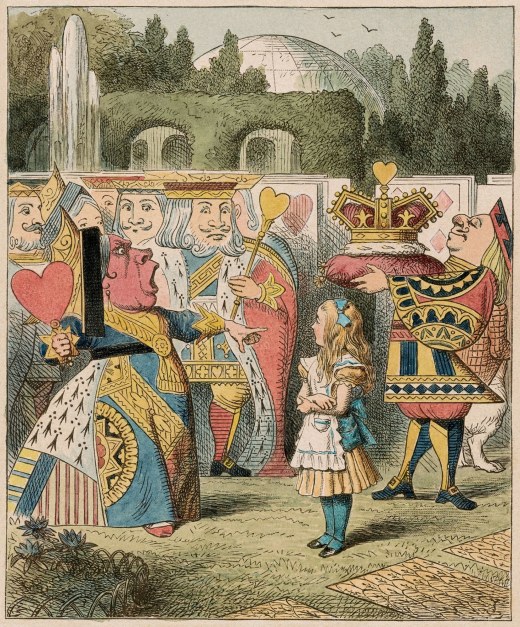
Image: “Off with her head!” The Queen of Hearts, here confronting Alice, embodies Coercive Power. Illustration by Sir John Tenniel (1820 – 1914, UK) for Alice’s Adventures in Wonderland (Lewis Carroll, 1865)


Defining and Delivering Good Customer Service

Superior customer service is a cornerstone of the customer experience and the customer experience is a foundational element of the sales journey. I see the customer experience as governing everything that leads up to the sale and customer service as governing what happens after the sale. Along with designing a confidence-building customer experience that persuades prospects to become customers once the need for your products or services is established, to remain viable, every business must develop customer service protocols that support customer retention and encourage referrals.

As reported in Forbes Magazine in May 2018, American businesses lose $75 billion annually due to poor customer service and the U.S. Small Business https://www.forbes.com/sites/shephyken/2018/05/17/businesses-lose-75-billion-due-to-poor-customer-service/#5777314e16f9 Association reported in 2018 that 68% of customers stopped doing business with a company due to poor customer service. It is worthwhile to review your company’s customer service from time to time. Below are suggestions that might guide a refresh of your company’s approach to customer service:

  1. Answer the phone.  When a prospective customer calls for information, s/he does not want to leave a voicemail message and wait for an answer. The prospect wants to speak with a live person now who can answer questions quickly and correctly, in a friendly and professional manner. Hiring the optimal number of front-line staff is the antidote. Freelancers who work alone and receive a fair amount of incoming calls can hire a telephone answering service to take calls when you cannot.

2. Take the extra step. When the intention is to help a prospective customer, understand that doing the minimum is not enough. For example, when speaking with a prospect who has questions about your products or services, merely directing him/her to the company website to obtain more information does not exemplify good customer service. Instead, ask the customer about the problem that must be solved, inquire as to what s/he would like to achieve and then discuss how your product or service can (or cannot) provide the desired solution.

3. Be helpful. If it is discovered while speaking with a prospect that your product or service cannot provide the necessary solution, do not be afraid to refer the prospect to a competitor or another company that can meet his/her needs. Your generosity will be remembered and may be returned with future business and referrals.

4. Listen. Let the customer talk. Allow the customer to ask questions or describe a problem. You (or front-line staff) ask clarifying questions along the way, to demonstrate that you are listening and evaluating how your products or services might be useful (or not) to the customer. The more front-line staff know about your customers and their needs, the more of an asset they will be to your company and customers. Prospects and customers will appreciate the empathy and product knowledge and that will almost certainly increase customer retention, new business and referrals.

5. Resolve problems quickly. No business owner enjoys receiving complaints, but those complaints reveal product or process breakdowns that you have the opportunity to fix. Customers gain confidence when a business quickly responds to and resolves complaints. Apologize profusely and throw in something extra (an upgrade or gift certificate, based on the price of the item purchased) to demonstrate that you value the customer and regret the inconvenience that you’ve caused. If handled correctly, you will win repeat business and a source of referrals (instead of bad-mouthing on Yelp).

6. Train staff. Make training a key element of front-line staff on-boarding. Conduct a product boot camp for new hires, plus an annual refresh for all staff, to ensure that employees are familiar with your product and service lines (bring in a Freelance colleague with sales training experience to conduct the annual training session). Give front-line staff the tools and information they need to support customers as efficiently as possible. Empower them to make those small customer-pleasing decisions, so they’ll rarely have to say, “I don’t know, but the owner will be back at…”

Thanks for reading,

Kim

Photograph: Date night at the malt shoppe 1930s USA

Bad Decisions: Or, Why We Screw Up

Research has shown that every day, we make 2000 decisions, i.e. choices, by another name. Most of our decisions are minor and we make them quickly, almost without thinking. We decide what to wear to work in the morning, we choose whether to eat lunch now or in 30 minutes.

But a select few of our decisions have serious consequences and for that reason they demand serious thought, if not actual research. The choices we make affect our health, safety, finances, relationships, our time and our reputation. Ultimately, our decisions define our lives. Consistently making good decisions can be considered among the best things we can do for ourselves, in both our personal and professional lives. 

Now when we make a decision, we do not always have all of the information that we’d like to have. Sometimes, what one could reasonably expect to be a sound decision turns out to be less than positive because of factors that were unknown when the decision was made.

According to Michael Erwin, CEO of the not-for-profit organization The Character & Leadership Center, U.S. Army Reserves Lt. Colonel, Asst. Professor in Leadership and Psychology at the U.S. Military Academy /West Point and author of Lead Yourself First (2006), those faced with an important decision should be mindful of the following conditions, which are capable of undermining good decision-making:

Decision fatigue

With so many decisions to make, especially those that will have a big impact on our own lives or the lives of others, it’s almost inevitable to avoid decision fatigue. To counter it, identify the most important decisions you need to make and arrange to make them when your energy levels are highest.

Social Psychologist Roy Bauminster studied mental discipline at Case Western Reserve University in Cleveland, OH and at Florida State University in Tallahassee.  His work indicates that it’s best to make important decisions in the morning after eating a light, nutritious breakfast. Our brains derive energy from healthy food and that helps us to comprehend and value long-term prospects and bolsters decision-making ability.  In the morning we have enough willpower to exercise the self-control needed for making important strategic or financial decisions.

Bauminster advises that we tackle big decisions first, before we have to make numerous smaller decisions that will sap energy and lead to decision fatigue.  So do your best to schedule client meetings for early in the day, before late afternoon, whenever possible. Write and pitch proposals early in the day as well.

According to the researcher Martin Hilbert, Professor of Communication at the University of California at Davis and instructor of the seminar Information and Communication Technology: A Venture into Applied Data Science, our brains process about five times the amount of information today as we processed in 1986. Consequently, many of us live in a continuous state of distraction and we struggle to focus. Ongoing distractions are detrimental to sleep, productivity, concentration and, yes, decision-making.

To counter this, schedule time each day to go offline and step away from email, social media, news and the onslaught of the Information Age. It’s easier said than done, but do-able if you make it a priority.

Insufficient information

Researchers at Northwestern University’s Kellogg School of Management in Evanston, IL found that in a typical meeting, an average of three people do 70% of the talking. As author Susan Cain describes in her book Quiet: The Power of Introverts (2012), many introverts are reluctant to speak up in meetings until they know precisely what they want to say. Unfortunately, introverts fairly often feel blocked by overly expressive extroverts and they keep their insights to themselves. As a result, decision-makers might ignore or gloss over certain possible answers or options, perhaps due to the bias of habit (“we’ve never done that before”).

Meeting conveners can temper this inclination by sending out a meeting agenda 24 hours in advance, to give everyone time to think about their questions and suggestions regarding the agenda items. Furthermore, it is incumbent upon the convener to create an environment that encourages all attendees (whether they participate physically or virtually) to contribute— i.e., speak up and share information and when necessary, persuade others to examine and question their assumptions.

Introverts often ask the right questions, or contribute great ideas and relevant information to their teams, because while the extroverts are busy talking over one another and doing whatever possible to monopolize the conversation, introverts are quietly listening and thinking, questioning and analyzing. Decision-makers can greatly benefit from input supplied by the quiet members of their team.

Multi-tasking

There are few jobs left in the world today that don’t require at least some multi-tasking. While that’s the reality, research pioneered in 2009 by Earl Miller, Professor of Neuroscience at the Massachusetts Institute of Technology, showed that performance, including productivity and effective decision-making, can be diminished by as much as 40% when we attempt to focus on two (or more) cognitive tasks simultaneously. When called to make an important decision, set aside a block of time so that you can devote the required thought and focus to the question (or task).

Analysis Paralysis

The Information Age has deluged us with an abundance of information—Big Data, algorithms and a vast array of metrics— and there’s almost no end to the amount of information one can access. However, more information doesn’t necessarily lead to the best result.

Information overload can hinder the decision-making process; the more information there is to consider, the longer it takes to make the decision. Which data thread should we follow? Analysis-Paralysis, which is an expression of confusion and fear, can set in.

Because time is often a factor in big decisions, knowing when to draw the line on data gathering and move forward to finalizing your decision is a valuable leadership skill. While the decision-making process should be thorough, the best way to make good decisions is not to continually search for more information but instead to understand what information will be useful, review the selected data, set a decision-making deadline and adhere to it.

Emotions

Strong emotions have the power to impair one’s ability to make sound decisions and it is advisable to delay important decisions when one is angry, frustrated, excited, or even very happy. May I also include fatigue, inebriation, illness, pain and hunger in this category?

During those times, one’s ability to reason and take a measured and balanced view of an important question or unfolding events usually disappears. When blood sugar drops, a trip to the grocery store often results in a shopping basket filled with the wrong foods. Sending an email when angry or frustrated can present a danger to one’s career or business, since the temptation to use provocative or even harsh language could be strong and the ability to self-censor may be low. Likewise, inebriation, fatigue, illness and pain may potentially diminish one’s ability to think clearly and reach a rational decision about anything of importance.

When faced with an important decision while in the grip of strong emotions or similar feelings, honor your emotional state and focus on self-control. Give yourself time to calm down and gain perspective on what is happening. Forgive yourself, postpone your response, breathe and take a time-out. Have a cup of tea. If possible, you might also take a nap or a shower. Resist the temptation to respond to people or make decisions while you’re flustered or agitated.

Thanks for reading,

Kim

Image: Sir Peter Paul Rubens (Belgium, June 1577 – May 1640) The Fall of Man, Adam and Eve 1628-1629, courtesy of The Prado Museum, Madrid

5 Genius Questions for Your Customer Survey

Every business owner or leader must study his/her customers (or potential customers for those in start-up or new product launch mode) and gather as much potentially useful information about them as possible. The first and greatest commandment of business is “know thy customer” and the research must continue for the life of the business. We can never stop learning.

The important matter of measuring customer satisfaction and customer loyalty became the life’s work of Frederick F. Reichheld, now an Emeritus Director of the Boston, MA consulting firm Bain and Company, also the founder of its Loyalty practice and author of The Ultimate Question: Driving Good Profits and True Growth (2006). Reichheld reported that it took two years of studying customer satisfaction and customer loyalty survey responses and correlating those responses to actual customer behavior—i.e., purchases and referrals made and then linking customer behavior to growth—to discover that a single survey question can reliably predict sales revenue growth.

The big reveal question does not directly address either customer satisfaction or customer loyalty. Rather, it simply inquires about customers’ willingness to recommend a product or service to someone else. While other factors besides customer loyalty play a role in driving a company’s growth—economic or industry expansion, a product or service line that reflects the needs and tastes of current and prospective customers, good financial management and so on—repeat business and good word of mouth are indisputably two of the most important drivers of sales revenue growth and in general, no company can be profitable without them.

Loyal customers talk up a company to friends, family and colleagues. Their recommendations are among the truest demonstrations of loyalty because the customer puts his/her own reputation on the line when making them. Customers will risk their reputations only if they feel intense loyalty.

The customer experience is, I am certain, another significant factor in a customer’s willingness to recommend a business and many actions contribute to that experience. Marketing Departments point survey questions toward metrics they control, such as brand image, pricing and product features and benefits. But a customer’s willingness to recommend a business is also connected to how well the customer is treated by the front line employees—are they friendly (but not intrusive)? Are they helpful?

According to Reichheld’s findings, customer loyalty differs subtly but substantively from customer satisfaction. Gauging loyalty by way of the usual customer-satisfaction survey questions is not helpful. His research indicates that customer satisfaction lacks a consistently demonstrable connection to customer behavior and growth. Reichheld says it is difficult to identify a sufficiently strong correlation between high customer satisfaction scores and outstanding sales growth. “The question ‘How satisfied are you with (company X’s) overall performance?’ is a relatively weak predictor of growth,” he says.

One of the main takeaways from Reichheld’s research is that companies can keep customer surveys simple. The most basic surveys, providing that the right questions are asked, can allow companies to obtain timely data that is actionable. Reichheld goes so far to assert that a customer feedback program should be viewed not as “market research” but as an operating management tool. Below are five of Reichheld’s survey questions.

  • How likely is it that you would recommend (company X) to a friend or colleague?
  • How likely is it that you will continue to purchase products/services from (company X)?
  • How strongly do you agree that (company X) makes it easy for you to do business with it?
  • If you were selecting a similar provider for the first time, how likely is it that you would you choose (company X)?
  • How satisfied are you with (company X) overall performance?

Thanks for reading,

Kim

Photograph: (l-r) Phyllis Povah, Rosalind Russell and Joan Crawford in The Women (1939). Sales girl Crawford is showing her customers the fictitious fragrance “Summer Rain.”

Prediction: Emerging Social Media Platforms 2019 – 2020

Which new social media platforms are lining up to become The Next Big Thing for B2B marketers? Take a look at these four up-and-comers and figure out which might appeal to your customers and be a good forum for your products or services. Jumping in early can provide big benefits for your business, keeping you a step ahead of the competition. As they say, fortune favors the bold.

Lasso

Here is yet another video-based social media site, but it could be worth your time, especially when you consider how popular this form of content has become. Plus, Lasso is owned by Facebook and as such cannot be ignored. It’s being pitched as an alternative to TikTok (see below). Videos have a 15 second limit and users can add their favorite songs to play in the background. You can create and share videos with fun filters and effects. Users can also log in with a Facebook or Instagram account and cross-post videos to Facebook Stories. Posting Lasso videos to Instagram Stories is soon to come.

Why You Should Consider Using It: While Lasso isn’t as popular as TikTok now, it could rival its top competitor soon. If your target audience is using TikTok, Lasso is a platform you’ll want to keep an eye on. 

Steemit

Steemit is a blockchain-based blogging and social media site that rewards content creators and curators with the cryptocurrency named STEEM. Creators whose content gets up-voted are paid with STEEM, as are those who write useful comments on others’ content. Recipients of STEEM currency can take their digital tokens and exchange them for real money.

This Reddit alternative is about more than cryptocurrency and technology topics, however. Users are invited to create content on a wide range of subjects, including travel, photography, food, music and sports. Besides the Steemit platform, the service aims to compete with other social media platforms as well. To challenge Instagram, Steem created Photosteem and SteemQ is a video sharing platform built on the Steem blockchain that will chase Youtube’s market.

SteemQ and PhotoSteem will employ the same model as Steemit. Since Steem is open source and they have announced that they will support new applications, we’re likely to see more Steem platforms pop up in the future. As of March 15, 2019, the service had 1.2 million registered users.

Why You Should Consider Using It: While Steemit has a relatively small user-base so far, smart marketers can use the platform as an additional channel to share content, grow their audience and pick up some cryptocurrency along the way.

TikTok

In 2017, the lip-synching app Musical.ly merged with a similar, newer app called TikTok. The newly configured company has enjoyed explosive growth: as of 2019, TikTok has 500 million+ active monthly users worldwide and 800 million + downloads. TikTok is now more popular in app stores than Facebook, Twitter and Instagram. The service is a huge hit with younger audiences. According to the research firm Sensor Tower, TikTok was the fourth-most downloaded app in 2018.

TikTok’s short-form videos play on a loop, similar to the now-defunct Vine. Users can easily create and share content, but what sets TikTok apart from other video-creation platforms is the simplicity of adding musical overlays, fun effects, AR filters and more. Once you make a video, you can optimize by adding hashtags that can make it easier to find via search.

Why You Should Consider Using It: If your target audience is age 16-24 years, then TikTok is a great place to promote your business. I predict its popularity is poised to expand into the 25 – 39 year old cohort, based on a TikTok video of a service designed for parents of infants that was shown to me as I taught a business plan writing course yesterday evening. That TikTok is also potentially effective for fashion and e-commerce purveyors who want to work with influencers reinforces my confidence in the prediction.

The Cambridge, MA marketing firm Hubspot recently reported that The Washington Post is on TikTok and has already marked 54,000+ followers. Heads up, the Post’s TikTok content typically features relaxed and personal behind-the-scenes looks into its newsroom.

Vero

Vero is an Instagram alternative that boasts about having no ads, no data mining and no algorithms. Vero labels itself “more social, less media” and focused on providing a natural and ad-free experience. Users share photos, music, TV shows, movies, books, links and more. You can decide who can see each post by choosing between four categories: Close Friend, Friend, Acquaintance, or Follower.

Vero does not accept advertisements, a real plus for many users, but brands are able to work with influencers on the platform and pay to add a “Buy Now” button for their posts. Brands can create a Vero account and those brands whom Vero determines are capable of selling and fulfilling orders may share posts directly with their followers, i.e., those who opt-in to view posts that contain items for sale and a “buy” button to facilitate purchases.

Vero calls itself a subscription service but so far, the service is free. Registration for Vero can only be done on the app. There is no option to sign up on the website. Mashable reports that 50% of users are 21 – 40 years old and 68% male. As of March 1, 2019, there were 5 million subscribers.

Why you should consider using it: Without ads and algorithms, Vero is touted as the more “authentic” social media platform. It’s perfect for companies that want to build stronger, more meaningful relationships with their audience. Plus, because users can share such a wide range of content, it’s great for learning more about your target audience.

When evaluating which platforms are worth watching or experimenting with, here are four questions you should ask :

1. How many active users? Big numbers could mean that the platform is gaining momentum and your brand will have more opportunities to get in front of a large pool of users.
2. Are publications or thought leaders talking about it? If a platform doesn’t specify exact numbers, but marketing industry thought leaders or even news publications are discussing it, then it might be promising.
3. Will audiences be interested in the platform? While a tech novice might not enjoy TikTok, a teenager might get bored on Facebook. Younger people prefer visual apps like TikTok and Instagram. While you want to pay attention to the level of adaptability, you also pay attention to how your audience wants to interact with social media.
4. What type of content should we use to promote our brand on the platform? Always draft an action plan when introducing your brand on a new platform. If you can’t come up with any interesting ways to market your specific product on a really niche platform, you might want to postpone engaging. On the other hand, experimenting with different posting strategies could allow your brand to look creative and cool to your audience.

Thanks for reading,

Kim

Hipparchus (c.190 – c.120 BC), Ancient Greek astronomer, at the Alexandria Observatory in Egypt. At left is the armillary sphere he invented. Hipparchus is considered one of the greatest astronomers of antiquity, who calculated the length of the year. It is thought that the later work of Ptolemy was based on the work done by Hipparchus. Engraving from Vies des Savants Illustres (1877).