Figuring Out Your Brand

Recently, I presented a branding workshop for an SBA-affiliated business development organization that primarily assists women entrepreneurs to launch and build companies (of any size) that are groomed to succeed.  Identifying and communicating a company’s brand, that is reputation, is of critical importance because that is how customers current and potential connect with the company and its products and services.

But really, how do company founders figure out the brand? How much is determined by the company founder and how much by the customers? Consider the case of Timberland.

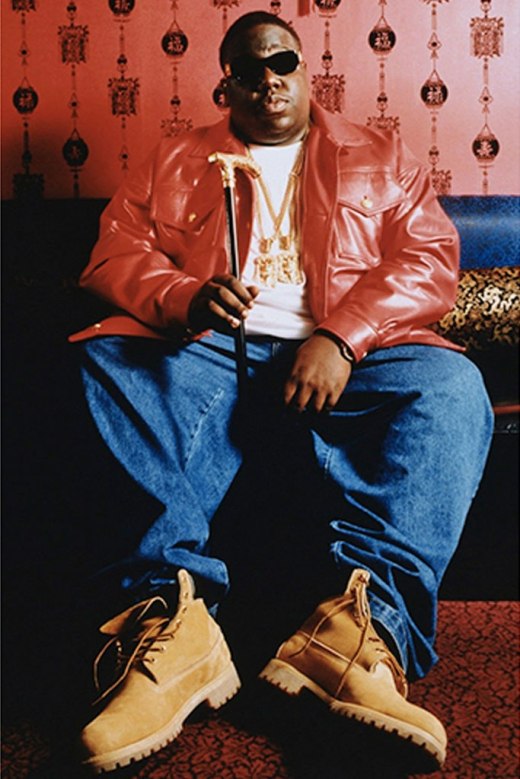
Timberland is the originator of those ubiquitous mustard pyellow boots that have been worn by men in the construction industry since about 1970.  But 20 years later, New York City hip-hop style icons became obsessed with the boots.

Well known rap music stars regularly appeared on stage and in videos  wearing a pair of humble, utilitarian Timberlands. The boots are the antithesis of chic and so they became chic.  A hip-hop performer named himself “Timbaland” and became one of the biggest names of the art form. Timberland boots now symbolized authentic urban cool.  Its brand identity changed forever.  The company recently launched a “Brooklyn Collection.”

I am writing this post just a week after the branding workshop that I presented and I regret that I didn’t have access to the information I share with you today.  Stephen Greyser, Professor Emeritus at the Harvard Business School and Matts Urde, Associate Professor at Lund University School of Economics and Management in Sweden, created what they named a Corporate Brand Identity Matrix, shown here, to help us identify and communicate our brand:

VALUE PROPOSITION
What are our key offerings, and how do we want them to appeal to customers and other stakeholders?
RELATIONSHIPS
What should be the nature of our relationships with key customers and other stakeholders?
POSITION
What is our intended position in the market and in the hearts and minds of key customers and other stakeholders?
EXPRESSION
What is distinctive about the way we communicate and express ourselves and makes it possible to recognize us at a distance?
BRAND CORE
What do we promise, and what are the core values that sum up what our brand stands for?
PERSONALITY
What combination of human characteristics or qualities forms our corporate character?
MISSION AND VISION
What engages us (mission)? What is our direction and inspiration (vision)?
CULTURE
What are our attitudes, and how do we work and behave?
COMPETENCES
What are we particularly good at, and what makes us better than the competition?

In addition, Greyser and Urde recommend five (5) guidelines as you conduct your brand identity process:

  1. Be concise

Use short phrases in your answers that can become headings, where you will later write more detailed descriptions that flesh out your brand identity and narrative.

2.  Be straightforward

Keep your answers clear and uncomplicated. Avoid jargon and industry-speak. Adopt a down-to-earth style that tells the story in just a few simple, well-chosen, words.

3.  Seek what is representative or characteristic

Use language or concepts that say “this is us.” Describe the essence of you, your products/ services, your company.

4.  Stay authentic

Be honest in your ownership and expression of the aspects of your company, products and/or services that are already firmly rooted in the minds of your customers and community in which your company operates.  In other words, if the company has always been known for traditional values and a conservative approach, don’t try to appear cutting edge.

5.  Seek what is timeless

Brand identity should be long-lasting. Despite validation by the hip-hop crowd, Timberland boots are still humble, practical footwear that can be worn in any weather.

Thanks for reading,

Kim

Photograph: Hip-hop legend Biggie Smalls (1972 – 1997) circa 1995

Shutting Down Toxic People

Today, I share with you insights about managing toxic people, a vexing class of individuals whom we all encounter from time to time.  The toxic types can infiltrate and poison our workplaces, schools, neighborhoods and volunteer service posts. They are even, I’m sorry to say, to be found in our religious institutions and our families. They are high-maintenance, manipulative and hurtful.

Those of us who are well-meaning and psychologically healthy are in need of polite and effective tactics that will keep the toxic at bay and prevent their calamities from spreading and tainting our experiences and opportunities, if not our lives. The ability to manage your emotions and remain calm under pressure has a direct link to your performance.

For help, I turn to a list of tactics developed by Travis Bradberry, PhD., clinical psychologist and expert on the subject of emotional intelligence.  Bradberry is the co- founder and CEO of Talentsmart, a consulting firm that provides training and coaching in emotional intelligence, a vital “soft skill” that impacts many aspects of relationship -building in our business and personal lives. Bradberry is also co-author (with Jean Greaves) of the best-seller Emotional Intelligence 2.0 (2009).

TalentSmart has conducted research reportedly with more than a million people and found that 90% of top performers are skilled at managing their emotions in times of stress in order to remain calm and in control. The ability to neutralize toxic people is a foundational competency for those who plan to become successful. Top performers have well-honed coping strategies that they employ to keep toxic people at bay.

Set limits

There is a fine line between lending a sympathetic ear to someone who is feeling disappointed or disrespected and feels the need to vent, as s/he seeks a way to cope.  It is quite another thing to be caught in the grip of a chronic malcontent for whom constant complaining seems to be the goal and to even entertain the thought of finding solutions to the problem are quickly dismissed.

Bradberry recommends that we ask the complainer how s/he intends to address the problem.  Be on guard for the malcontent to attempt to pull you into doing the repair work for them.  You may be met with a tirade (or a whine) about how “I thought I could depend on you to help me.” Gently point out that you are not the one who is upset. Sir/Madame Malcontent will be exposed as having no interest in solving any problems and that is your opportunity to politely distance yourself from this individual and refuse to remain a sounding board for ongoing complaints.

Rise above

Toxic people love to push buttons and generate conflict that inflates sometimes insignificant misunderstanding into a whirling tornado.  They are often irrational and thrive on arguments and power struggles; they have no filter and no off button. Whether their impulse is deliberate or unwitting matters little.

Instead, do what you can to remain calm.  Ignore any taunting and refuse to get drawn into debates and show downs, for you are too sane to prevail in such a fight.  Create distance and don’t engage.  If an individual persists in goading you into arguments, (including the arguments of third parties that do not involve you) it may be necessary to threaten and even pursue legal action, such as a restraining order, if you feel that the behavior has crossed the line into harassment (you cannot do this in the workplace, however).  You must stop cold behavior that you find unacceptably stressful or threatening.

Choose your battles

Understand that some battles are not worth the fight, even if you feel that you can win.  Do you want to die on this hill? Some battles are not worth the time and energy. Living well is the best revenge.

Aware of emotions

Bradberry points out that maintaining emotional distance from the toxic types requires emotional awareness.  Instead of allowing yourself to be manipulated emotionally and dragged into some irrational state of mind, calmly remind yourself that the toxic person is deliberately pressing your buttons (or perhaps inadvertently—who cares?) because s/he feels compelled to bully you into joining him/her in a rant, a whine, a shouting match, or some other counterproductive behavior.  Don’t go there.  Walk away, if possible, or change the subject.

Establish boundaries

The toxic are champion boundary busters. One of my mother’s sisters was very good to me but when it came to respecting boundaries, she could see no reason to do so (especially not those of a young person).  Whenever she saw me with food, she begged for a taste.  I would offer to make her a small plate and she would refuse, saying that she didn’t want that much, but only wanted “a taste of mine.”  She knew well that I didn’t like that behavior and I suppose I need to accept that disrespecting me was her goal.  She’s been gone for many decades, but the memory of her hurtful behavior will never leave me.  It poisons my memories of her.

I was a young adult when she died.  If she had lived longer, I would have become better at protecting my boundaries, despite the family pressure to give into her, an elder who had done me a big favor and always gave me nice gifts at birthdays and Christmas. I think I would have called her on it in a more forthright manner and if it meant that I saw a lot less of her, I would have done so and let her know the reason for my absence.

Now if your boss is the toxic person, it would stand to reason that the best thing would be to give him/her exactly what they ask for, on time and within budget.  But the problem is that toxic people love finding fault. They “move the goal posts” so that you can never succeed.  I suggest that whatever the boss wants from you, confirm it in email—all expectations, the budget and the deadline.

Forgive, don’t forget

There is lots of talk about forgiveness and I suppose some of it is useful.  Bradberry recommends it and I’ve come to the place in my life that I will concur, with limits. Forgive but do not forget.  Let the incident go, but do not give the wrongdoer another chance to violate you.  Or, hurt me once shame on you, hurt me twice, shame on me.

Thanks for reading,

Kim

Photograph: Anthony Perkins in Psycho (1960)

Highest Paying Freelance Gigs in 2019

According to the 2018 report Freelancing in America , a survey of 6000 U.S. workers conducted by Upwork and The Freelancer’s Union, there are 56.7 million self-employed workers in our country, from Lyft and Uber drivers to public relations specialists, ballet dancers to home organizers.  One in three (35%) workers in America participate in the Freelance gig economy either full-time or part-time.

As you might guess, not everyone is getting rich in the Freelance economy.  High tech workers have the most earning power, by far.  Fit Small Business, an online magazine that features articles targeted to small business owners and Freelancers, analyzed data from online job-finding sites including Upwork, Freelancer, Hubstaff and Guru to compile a list of what they predict will be the 10 highest-paying Freelance jobs of 2019.

  1.  Data Scientist/ Machine Learning EngineerDeep Learning  S115/hour       Deep learning is the specialty of these machine learning experts and it involves the development of neural networks that mimic the neural pathways in the human brain. These professionals possess advanced skills in algorithm and programming languages such as Tensorflow, Python, Java, Matlab and C++.
  2.  Digital Architect —Blockchain  $87/hour   The technology that powers cryptocurrencies such as Bitcoin, Ethereum and Monero is used to build new cryptocurrencies, cryptocurrency exchanges and helping businesses to set up cryptocurrency transactions for customers who want to buy in. Proficiency in C++, Python and Solidity is required.
  3.  Robotics Engineer—Robotics  $77/hour  These Freelancers design and build the mechanical elements and machinery used by advanced robots and automated technologies that companies use to make certain repetitive tasks more efficient and less expensive to perform. Robots have moved into stockrooms to fulfill orders, pharmacies to fill prescriptions, banks to serve as personal teller machines (and let’s not forget ATMs) and even, God save us, into certain bars on the Royal Caribbean Cruise line, where the robots can make two drinks a minute. Talk about a speed bartender! High-level skill in mechanical engineering software, including SolidWorks Professional, Simplify 3D and Photoview 360 are required.
  4.  Penetration Tester—Network Security  $66/hour  These professionals are good guy hackers. They investigate the potential vulnerability of a company’s computer network, so that the company will not fall prey to bad guy hackers who might infiltrate and sabotage its computer system. These Freelancers are certified systems security professionals.
  5.  Code Writer/ Amazon Web Service (AWS) Lambda  $50/hour   AWS is unique among computer servers in that it’s only “on” when it’s needed and the customer pays for hosting space only when applications supported are in use.  AWS runs code when an event triggers it (downloading the software program) and the customer pays only when the associated code runs.  Freelancers must know C #, Java, Node.js and Python.
  6.   VR Developer—Virtual Reality  $50/hour  Virtual reality experts develop algorithms that are mostly used in games like the blockbuster Angry Birds. Virtual Reality technology is increasingly used in healthcare and education. These professionals must be fluent in C++, C#, C, native iOS, Android and Java.  Be advised that the required skillset is unique to the platform used to build the VR app in development.
  7. Video Editor—Final Cut Pro X. $37/hour  Film studios, music video directors, wedding videographers and marketing/advertising companies are among the potential clients of these Freelancers. Freelancers who’d like to participate with the creative class must be able to not only cut video clips. but also use transitions, integrate music and edit scenes using multiple camera angles.
  8. Social Media Marketer/ Instagram  $30/hour   What a shame that jobs where creativity, judgment and the psychology of the end-user are so vital to the process of creating a memorable experience that builds brand loyalty and generates revenue, skills that cannot be learned in a series of online tutorials pay the lowest salaries? The automatons are making all the money, clicking away on their keyboards.  Instagram active users numbered a billion in June 2018 according to Statista and that’s a whole lot of campaigns to create and manage.  Freelance marketers must be able to create engaging content, build the brand voice, analyze performance metrics to monitor campaigns successfully, in consultation with the client.

Thanks for reading,

Kim

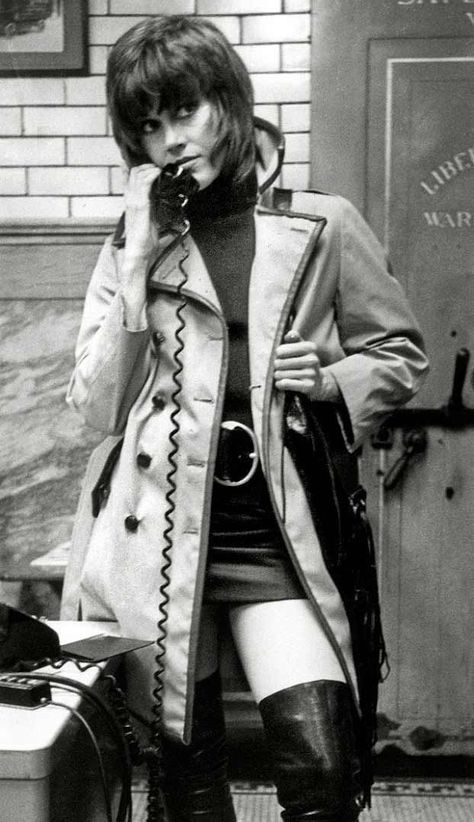
Photograph: Academy Award-winning actress Jane Fonda (Best Actress, Klute 1971 and Coming Home 1978) as Bree Daniels in Klute (1971)

Optimize Online Content for Voice Search

The thing about internet technology is that we’re always playing catch-up.  First, we researched and identified the best key words for our products and services as we introduced Search Engine Optimization to our websites and eventually, our social media postings.  Next, we hired a web developer to add the responsive design capability to our websites, so that they would download correctly into smartphones and tablets.

It appears that for our latest update, we must ensure that we’re using long-tailed key words, i.e. phrases, that will capture the voice activated searches of Siri and Alexa. Adweek reports that 67 million voice assisted devices will be in use in the U.S. before this year ends and that’s your motivation to seed your online content with phrases most likely to be recognized by A.I. enabled searches.

But let’s begin at the beginning—have you made any voice activated searches? If not, then try it out and make note of what you say.  The next time that you listen to iHeart Radio, grab your iPhone and ask “Siri, play Michael Jackson.” Or speak to your Android and ask, “Alexa, order us a half gallon of milk and a box of Fig Newtons.”

Notice that words such as where, find, order, how, who and where are often used in voice searches and you will be wise to include those words when you update your content for voice search optimization.  As well, keep in mind that voice searches are often used when the prospect is in motion and typing is inconvenient, for example, when walking or driving.

Voice search requires us to adjust our thinking (again!) to that of a potential customer and not of a business owner or marketer.  What questions might a prospect ask when looking for information about your particular expertise? “Siri, find me architects in Philadelphia that do over kitchens and baths.” “Alexa, who are web developers in Tulsa that can create a new website for me?” “Who can help me plan the company meeting we’ll hold in Milwaukee in October of this year?” “Where can I find a dog walker near me in Natchez?”

Voice search key word phrases are like a conversation and your online content should respond in kind.  Your newsletters, blog posts, FAQs page, white papers, case studies and descriptions of your products and services are ideal places to embed phrases that resemble prospect questions that are likely to be asked in voice searches.

Your prospective customers do not use industry-speak buzzwords such as leverage, growth hack, synergy, visionary, or disruptive.  Is it not time to purge those words anyway? Your prospects are looking for answers, so give them the answers in everyday words that everyone uses.  KISS–keep it simple, stupid—as you update your content to answer basic questions, including facts such as the products your organization sells, the services provided, the address of your business if customers can be expected to come in and the opening and closing times.

Thanks for reading,

Kim

Photograph: Taping Gang Busters, the “only national (radio) program that brings you authentic police case histories.” The program was broadcast from January 1936 – November 1957.